
The number most people ask first is the wrong number to start with. Geothermal HVAC cost is real and significant, but evaluating it against only the upfront price misses the point, the same way you would not judge a commercial roof solely by what it costs to install it. The right question is the total cost of ownership over 20 to 30 years. On that measure, geothermal almost always comes out ahead.
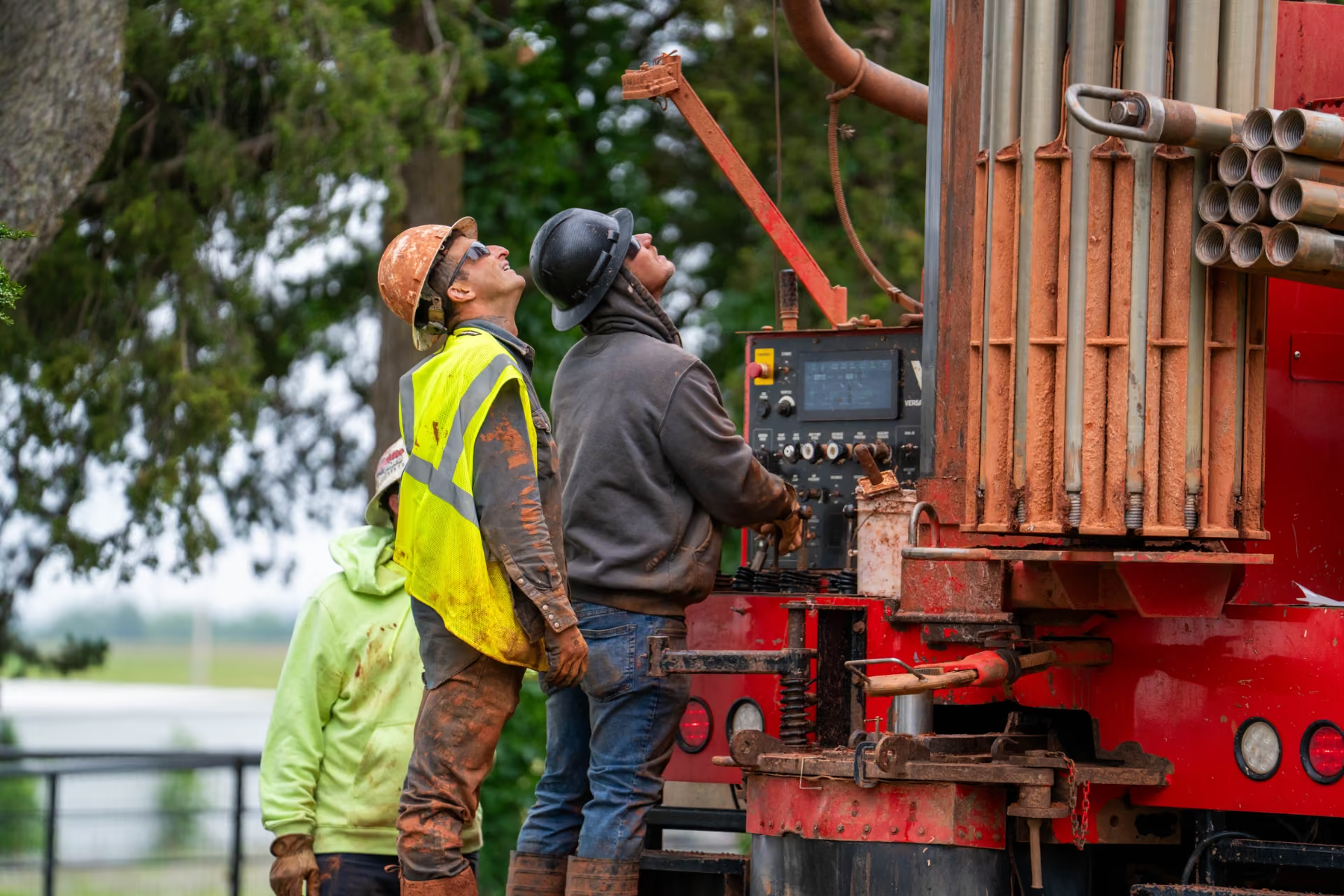
Geothermal heat pump installation cost in Oklahoma varies depending on soil conditions, building size, and system complexity. Well field drilling represents a significant portion of that cost, which is why choosing a contractor with in-house drilling capability matters. GES maintains direct cost control over drilling, the most variable part of any project, which means fewer surprises between the estimate and the final number.
Geothermal systems typically reduce HVAC-related energy consumption significantly compared to conventional systems. The ground loop moves heat rather than generating it, which requires far less energy. For a school district or commercial facility spending hundreds of thousands annually on HVAC energy, the savings add up fast. One district GES has worked with documented over $16 million in projected 30-year savings when comparing geothermal to a conventional HVAC replacement plan. The numbers are facility-specific, but the direction is consistent.
Payback periods on commercial geothermal HVAC service projects typically range from 7 to 15 years, depending on project scale, financing structure, and available incentives. Federal tax credits, when applicable, can significantly shorten this timeline. For organizations that cannot absorb upfront capital, GES offers service agreement structures: GES owns the system, claims available tax credits, and charges a fixed monthly fee the client pays instead of their current energy bill - often at a net savings from day one.
The well field in a geothermal HVAC installation can last 50 years or more. Heat pump equipment typically runs 20 to 25 years with standard maintenance. A conventional rooftop system needs full replacement every 15 to 20 years at significant capital cost. For any Oklahoma building owner or facility manager with a long-term ownership horizon, that lifecycle difference is the story. Among geothermal HVAC companies operating in Oklahoma, GES brings a level of drilling depth, financial structuring, and lifecycle stewardship that makes the long-term case even stronger.
If you want to know what geothermal actually costs (and saves) for your specific facility, GES provides a full cost and savings analysis at no cost as part of every evaluation. Not estimates. Actual modeled numbers based on your building data.